Two Novellas I've Read Recently and Why I Like Them
· | Erika's Husband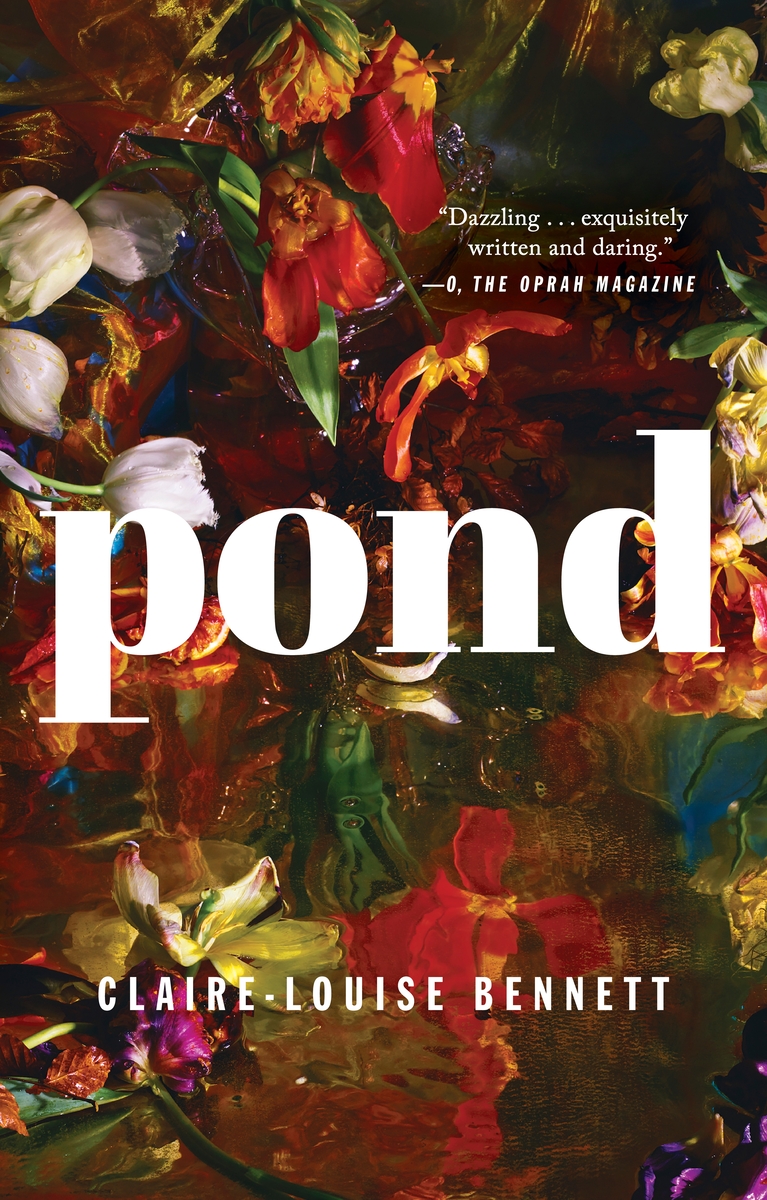
Publisher Description: Immediately upon its publication in Ireland, Claire-Louise Bennett’s debut began to attract attention well beyond the expectations of the tiny Irish press that published it. A deceptively slender volume, it captures with utterly mesmerizing virtuosity the interior reality of its unnamed protagonist, a young woman living a singular and mostly solitary existence on the outskirts of a small coastal village. Sidestepping the usual conventions of narrative, it focuses on the details of her daily experience—from the best way to eat porridge or bananas to an encounter with cows—rendered sometimes in story-length, story-like stretches of narrative, sometimes in fragments no longer than a page, but always suffused with the hypersaturated, almost synesthetic intensity of the physical world that we remember from childhood. The effect is of character refracted and ventriloquized by environment, catching as it bounces her longings, frustrations, and disappointments—the ending of an affair, or the ambivalent beginning with a new lover. As the narrator’s persona emerges in all its eccentricity, sometimes painfully and often hilariously, we cannot help but see mirrored there our own fraught desires and limitations, and our own fugitive desire, despite everything, to be known. Shimmering and unusual, Pond demands to be devoured in a single sitting that will linger long after the last page.
My Thoughts (Very Minor Spoilers): Pond is a collection of short stories, although I wasn’t aware of this when I read it. I interpreted it as a novella of disjointed moments connected by a singular thread, which is the main character. Which I guess is what a short story collection is, sometimes. This book reminded me of My Year of Rest and Relaxation by Ottessa Moshfegh. Both books center around unnamed woman narrator’s doing a lot of sitting, standing, and contemplating. They’re both a bit anxious and unsure of themselves, they both have uncomfortable ties to strange men, and they both eat very little. This is not a plot-heavy book but rather a delve into a woman’s mind in moments of solitude. Each story is a snippet into her life – cooking soup, taking a walk, sorting through papers. There was moment in the book where she recollects taking down Christmas holly from her apartment and burning it in the fireplace:
I was enormously pleased in fact and shoved in branch after branch even though the flames were becoming really tall and very bright and the holly gasped and crackled so loudly. That’s right, suffer, I thought, damn you to hell—and the flames sprouted upwards even taller and brighter and made the most splendid gleeful racket. Burn to death and damn you to hell and let every twisted noxious thing you pervaded the room with go along with you, and in fact as it went on burning I could feel the atmosphere brightening. I won’t do it again, I thought, I won’t have it in the house again.
In these long and unsteady paragraphs, the narrator elaborates on simple moments in a way that reveals her inner anxieties and melancholy. Bennett creates a compelling character in these inner mind rambles. Little moments become long extended philosophies. In a way, it is an absurd novella like the other novella I recommend, The Stranger by Albert Camus The narrator is so weird and I think weird women in novels are highly underrepresented, which is why I wanted to share this book. Actually, I feel like this book has inspired my blog a bit, in the way the narrator can go into these tangents about something seemingly insignificant, and make it seem so significant, and then insignificant again. It’s something I’ve been trying to replicate, sometimes without even realizing.
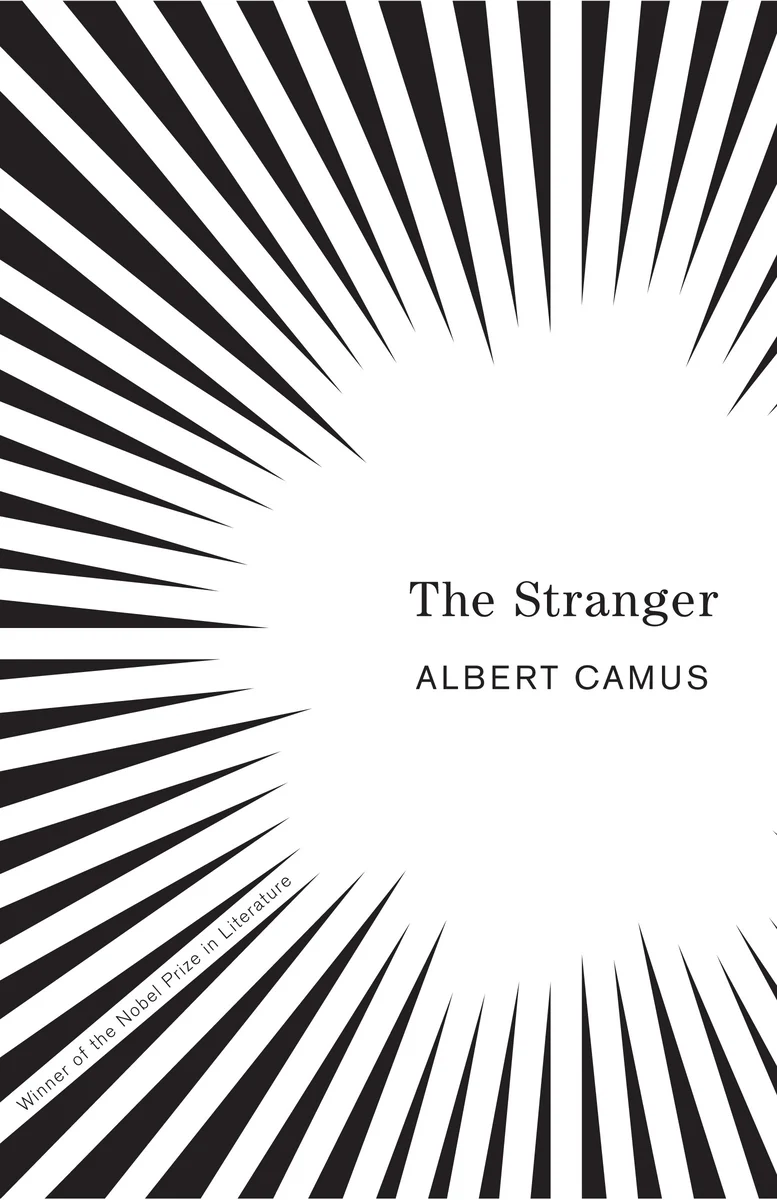
Publisher Description: Since it was first published in English, in 1946, Albert Camus’s first novel, The Stranger (L’etranger), has had a profound impact on millions of American readers. Through this story of an ordinary man who unwittingly gets drawn into a senseless murder on a sundrenched Algerian beach, Camus explored what he termed “the nakedness of man faced with the absurd.” Now, in this illuminating translation, extraordinary for its exactitude and clarity, the original intent of The Stranger is made more immediate. This haunting novel has been given a new life for generations to come.
My Thoughts (Moderate Spoilers): This book has produced some interesting takes over the last decade. When I finished reading it, I thought the main character, Mersault, was some sort of sociopath based on his actions. He starts off as indifferent about his mother’s death, which is startling, but everyone doesn’t have a good relationship with their mother, so I get it. He helps a woman beater find a woman to beat. He shoots a man 5 times at point blank range because the sun is in his eyes. When he is put on trial and given his sentence, I thought it was fair. He showed no remorse and made no attempt to. In fact, he acted like all his actions were inevitable, as if he had no control over his own body but was being pulled by the threads of life like a puppet. I found this mindset to be extremely unnerving. If everyone in society acted without a care for anyone, and simply went with the presumed tide of life, there would be a lot of miserable people, a lot more crime, death, and disease. It’s not a good way to organize society.
Upon reading some analysis of the book, I’ve learned it is a sort of exploration into absurdism or existentialism, this idea that life is… absurd. Lots of things happen, but nothing really matters because it all ends the same way. When Meursault refuses to contort to societal expectations, like showing empathy or believing in God, he is accepting the absurdity of life. It makes no difference if he feels bad or cries at his mother’s funeral or kills the man or not, because mother is still dead and the man is still dead. His indifference is supposed to be an act of rebellion. This is what I’ve surmised from my internet research, and it’s an explanation that I can’t really accept. Yes, we all die and nothing really matters and everything is absurd but while we are on this earth, as absurd as it is… we still feel things. Falling off a bike hurts, losing a pet dog hurts. It’s absurd because it “doesn’t matter” but we still feel these things. Which is why we should try our best to not inflict painful feelings upon other people. So at least, while we are on this earth, life can feel good and we can feel good feelings. Although I understand many people do not subscribe to this view, which makes me nervous. Anyway, besides being a book that causes much debate, it is also very well written. Here’s a snippet I liked:
[Maria] was wearing one of my pajama suits, and had the sleeves rolled up. When she laughed I wanted her again. A moment later she asked me if I loved her. I said that sort of question had no meaning, really; but I supposed I didn’t. She looked sad for a bit, but when we were getting our lunch ready she brightened up and started laughing, and when she laughs I always want to kiss her. It was just then that the row started in Raymond’s room.
Here, Meursault breaks Maria’s heart without a blip, without even thinking. He doesn’t love her, so he says no. Then he wants to kiss her. Then there’s a fight. Things just happen and he’s an observer, even his own words don’t seem to come from him, but from some script he assumes every person is also reading from. Camus’ prose emphasizes the passionless and passiveness of Meursault as he floats through life and death. A very compelling work for sure!